
September 2022 Safety Scoop: Emergency Response Equipment
September 2022: Emergency Response Equipment
No company wants to experience an actual emergency in the workplace. The best thing you can do is to be prepared, plan ahead and have the proper emergency response equipment available.
Get the Scoop
No company wants to experience an actual emergency in the workplace. The best thing you can do is to be prepared, plan ahead and have the proper emergency response equipment available.
When preparing for emergency response having the proper equipment available can save lives. In this month’s Safety Scoop, MHSA will provide resources on the importance of understanding the purpose of and application of Emergency Response Equipment.

Here's The Scoop
What are the OHS requirements for emergency preparedness?
Does your workplace have appropriate plans in place that include assessing the risk of workplace activities?
Do you know what equipment is needed for all types of potential and actual emergencies at your workplace?
And much more…
Get the Training

This four-hour course will assist employers in identifying worksite-specific emergencies that may require rescue or evacuation and then developing safe and effective response plans, in accordance with Part 7 of the Alberta OH&S Code.
Topics include:
Emergency Response Overview, Team Planning and Risk Assessment
Emergency Mitigation, Preparedness, Assessing Response Capabilities, and Recovery & Disaster Management
Leadership, Teamwork, Communication and Inter-Agency Collaboration
Strategic Planning, Decision Making, Problem Solving and Continuous Improvement
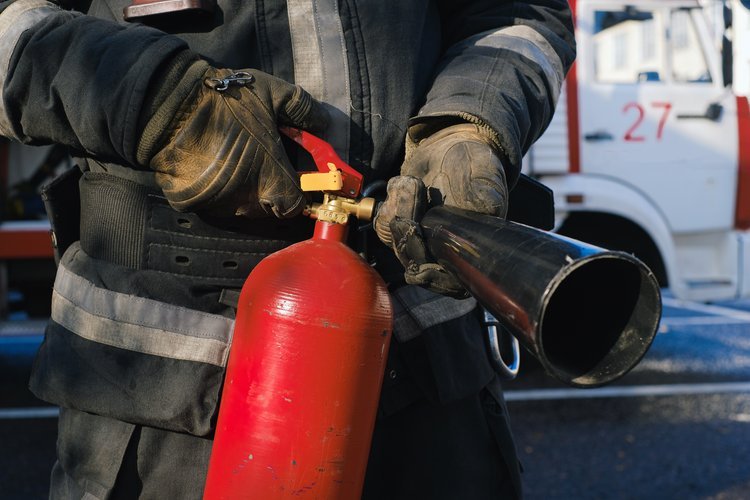
This 4-hour "Hands-On" course is intended to give shop, field and office workers a basic understanding of the physical characteristics of fire and the safe use and limitations of portable fire-fighting equipment.
If a fire breaks out at your workplace, the ability to properly use a fire extinguisher could prevent a small fire from becoming large and causing significant damage. You’ll learn all the basics for fighting fires with our fire extinguisher training. Participants even have the chance to put their skills into practice with a live fire.
Topics include:
Combustion process and how fires burn
Fuel and heat types
Common types of fire extinguishers and extinguishing agents
Steps involved in extinguishing a fire: P.A.S.S. (Pull the pin, Aim, Squeeze, Sweep)
Basic fire safety guidelines, including the Occupational Health &
Safety Act, Regulation & Code
Visit our course calendar to explore other courses, see availability in your region, and register today!
August 2022 Safety Scoop: Load Securement
AUGUST 2022 - Load Securement
Many Alberta manufacturers not only design and build their own product, but also transport it to their customers or job sites.
Transporting of goods requires an understanding of the requirements surrounding load securement.
The National Safety Code (Standard 10) was developed to ensure the safety of workers, drivers and the general public on Alberta roadways.
Load Securement
Get the Scoop

Many Alberta manufacturers not only design and build their own product, but also transport it to their customers or job sites.
Transporting of goods requires an understanding of the requirements surrounding load securement.
The National Safety Code (Standard 10) was developed to ensure the safety of workers, drivers and the general public on Alberta roadways.
Here's The Scoop
What is considered an appropriate load securement maker?
How to calculate Working Load Limit
What kind of hazards assessments should be carried out?
What is considered a suitable strap/tiedown?
And much more…
DOWNLOAD THE SCOOP FOR FREE NOW
Get the Training
This 1-day course teaches participants how to properly identify, assess and control workplace hazards in accordance with Alberta Occupational Health and Safety legislation. Participants will learn the MHSA basic method of recognizing, evaluating and documenting workplace hazards.
Hazard assessment is the keystone of a successful health and safety management system and, therefore, must be performed correctly and reviewed regularly to ensure the workplace remains free of unnecessary hazards.
Topics include:

Alberta OH&S Code Part 2 Hazard Assessment, Elimination and Control
Benefits of performing hazard assessments
Methods of hazard identification, assessment and control
Hazard assessment techniques
Hierarchy of hazard controls
Visit our course calendar to explore other courses, see availability in your region, and register today!
July 2022 Safety Scoop: Crane Safety and Competency
Crane Safety and Competency
Everyone working around overhead cranes needs to be aware of the unique hazards that a moving load can create. A worker can be crushed between the load and a stationary object, or be struck by a turning, swinging, tipping or falling load. This can cause serious injuries to fingers, hands, legs, feet, head and torso.
Crane Safety and Competency
Get the Scoop
Everyone working around overhead cranes needs to be aware of the unique hazards that a moving load can create. A worker can be crushed between the load and a stationary object, or be struck by a turning, swinging, tipping or falling load. This can cause serious injuries to fingers, hands, legs, feet, head and torso.
Workers must be watchful at all times when cranes are active and keep themselves out of the load path.
Crane operators must be familiar with their crane’s operating characteristics and plan every lift to ensure hazards are controlled and load path is clear. They must also be competent for the types of lifts they are required to make. This requires suitable training in proper rigging and crane operating principles as well as competency evaluation.
Here's The Scoop

What are some common hazards?
Statistics of incidents
What are the legislative requirements for cranes?
What can I do to protect myself and others?
And much more…
Get the Training
Overhead Crane Operator - Standard
This one-day, hands-on course is aimed at workers who have completed the MHSA basic rigging course within the previous 12 months and operate an overhead crane for lifting symmetrical loads. Our overhead crane training will teach you how to safely use overhead cranes to lift, move, and place loads through a combination of classroom and practical instruction.
The classroom instruction consists of presentations and discussions, whereas the hands-on training involves demonstrations followed by practical exercises. All activities are led by an experienced instructor.
Topics include:

Pre-operational inspection
Lift planning
Safe Operating Position
Load travel and control
Load positioning
Below the hook lifting devices
Visit our course calendar to explore other courses, see availability in your region, and register today!
June 2022 Safety Scoop: Compressed Gas
JUNE 2022 | Compressed Gas
The newest Safety Scoop is all about how to handle and work safely with compressed gases. Help ensure your workplace is working safely with compressed gases by using the safety scoop in your next safety meeting! Due to their highly pressurized nature, working with compressed gases has many associated hazards which include, but are not limited to, fire, explosion and frostbite. To help protect against these hazards, the Alberta OHS Code has standards on the proper use, storage and transportation of compressed gas
Compressed Gases
Get the Scoop

The newest Safety Scoop is all about how to handle and work safely with compressed gases. Help ensure your workplace is working safely with compressed gases by using the safety scoop in your next safety meeting! Due to their highly pressurized nature, working with compressed gases has many associated hazards which include, but are not limited to, fire, explosion and frostbite. To help protect against these hazards, the Alberta OHS Code has standards on the proper use, storage and transportation of compressed gas.
Here's The Scoop
What is a compressed gas?
What are the legal requirements for compressed gas?
What hazards are associated with compressed gases?
What can I do to protect myself and others?
And much more…
Get the Training

This four-hour course will assist employers in identifying worksite-specific emergencies that may require rescue or evacuation. It also instructs participants on how to develop safe and effective response plans.
Topics include:
Emergency Response Overview, Team Planning and Risk Assessment
Emergency Mitigation, Preparedness, Assessing Response Capabilities, and Recovery & Disaster Management
Leadership, Teamwork, Communication and Inter-Agency Collaboration
Strategic Planning, Decision Making, Problem Solving and Continuous Improvement
May 2022 Safety Scoop: Hand Safety
MAY 2022 | Hand Safety
This month we’ve collaborated with Superior Glove and Honeywell to bring you a Safety Scoop focused around hand safety.

Hand Safety
Get the Scoop
This month we’ve collaborated with Superior Glove and Honeywell to bring you a Safety Scoop focused around hand safety.
In the manufacturing industry, hands play a vital part in our everyday work. Statistics from Alberta WCB and nationwide show us that hands are at high risk for injury and incidents, if we don’t use caution. Determining and utilizing the proper PPE is an essential part of the hazard control and assessment process. This level of protection can assist you in protecting workers from incidents, injuries or exposure to hazards. Learn more about how you can protect your hands in this month’s safety scoop.
Here's The Scoop
What are the most common injuries in manufacturing?
How to know when hand protection is required
How to select the proper hand protection
What kind of hazards can hand protection protect against?
And much more…
Get the Training

This one-day course teaches participants the basic principles of machine guarding and the importance of locking out machinery and equipment. Employee injuries due to exposure to unguarded or inadequately guarded machines are preventable and this course focuses on recognizing the advantages and limitations of safeguarding devices and controlling general hazards associated with the operation of machinery. We review the importance and functions of safety guards and devices on heavy machinery to prevent machine related injuries.
Topics include:
Point of operation guarding
Power transmission devices
Machinery operating controls
Hazardous motions and actions
Alberta OH&S safeguard requirements
April 2022 Safety Scoop: Occupational Illness & Disease
APRIL 2022 | Occupational Illness & Disease
Occupational illnesses, diseases, and disorders can manifest themselves in a variety of ways, from mental illnesses to tennis elbow to musculoskeletal disorders. In fact, there are over 150 conditions that are considered musculoskeletal disorders alone! With so many conditions to be aware of and to watch for, knowing signs, symptoms and prevention methods of occupational illnesses and diseases is of top importance when considering workplace health and safety!
Get the Scoop

Spring has sprung, and so has the April Safety Scoop! This month we’re looking at Occupational Illness and Disease. Occupational illnesses, diseases, and disorders can manifest themselves in a variety of ways, from mental illnesses to tennis elbow to musculoskeletal disorders. In fact, there are over 150 conditions that are considered musculoskeletal disorders alone! With so many conditions to be aware of and to watch for, knowing signs, symptoms and prevention methods of occupational illnesses and diseases is of top importance when considering workplace health and safety! And this safety scoop will help you do just that!
Here's The Scoop
What are occupational illnesses and diseases?
What are the most common occupational illnesses and diseases?
How can I recognize them?
How can I prevent them?
How and when do I report them to WCB?
And much more…
Get the Training

This 1-day course teaches participants how to properly identify, assess and control workplace hazards in accordance with Alberta Occupational Health and Safety legislation. Participants will learn the MHSA basic method of recognizing, evaluating and documenting workplace hazards.
Hazard assessment is the keystone of a successful health and safety management system and, therefore, must be performed correctly and reviewed regularly to ensure the workplace remains free of unnecessary hazards.
Topics include:
Alberta OH&S Code Part 2 Hazard Assessment, Elimination and Control
Benefits of performing hazard assessments
Methods of hazard identification, assessment and control
Hazard assessment techniques
Hierarchy of hazard controls
March 2022 Safety Scoop: Hearing Loss Protection
MARCH 2022 | Hearing Loss Prevention
Hearing is a serious issue that affects many people in their day to day lives. Did you know that noise induced hearing loss is the number one occupational disease in the U.S.A and Canada? Hearing loss is a long-term, acute health condition that can result in reduced quality of life, productivity, and increased risk of incidents at the workplace. Learn how to protect the hearing of your employees!
Hearing Loss Protection
Get the Scoop

Our focus in March is on Hearing Loss Prevention. This is a serious issue that affects many people in their day to day lives. Did you know that noise induced hearing loss is the number one occupational disease in the U.S.A and Canada? Hearing loss is a long-term, acute health condition that can result in reduced quality of life, productivity, and increased risk of incidents at the workplace.
Hearing health can be affected by more than just loud noises. Damage to hearing can happen to anyone and anywhere, especially if hazards have not been identified and controls have not been put in place to protect workers. Dig into this month's Safety Scoop to learn more!
Here's The Scoop
How does hearing work?
What is noise induced hearing loss?
What are ototoxic chemicals?
How can I prevent hearing loss at home and at work?
And much more…
Get the Training

This online, self-paced course introduces workers to the Alberta Occupational Health and Safety (OHS) Act, Regulation, and Code. By reviewing this information, workers should have an awareness, understanding, and confidence needed to work safely.
Topics covered include:
How to increase worker knowledge regarding health and safety systems
The basics of health and safety legislation
The types of hazard assessments and controls
The importance of safety training and safety meetings
What safety measures are taken when other parties visit a worksite
How to prevent incidents through measures such as lockout/tagout (or LOTO)
The importance of worksite incident investigations, and
How to develop an emergency response plan
Visit our course calendar to explore other courses, see availability in your region, and register today!
February 2022 Safety Scoop: Rigging
FEBRUARY 2022 | Basic Rigging
It is essential that workers are properly trained and competent and to know how to use rigging properly while lifting, moving, turning and flipping materials across all industries. Proper rigging training, maintenance and knowledge reduces the likeliness of injury and makes the workplace safer for everyone.
Get the Scoop

Basic Rigging
February’s Safety Scoop focus is Rigging. Did you know that most industries in Alberta use cranes, rigging and hardware to move, lift and transport equipment in and around their facilities and yards? In addition, cranes, hoists and lifting accounted for the most injuries and incidents with 21 Potentially Serious Incidents being reported to Alberta OHS since 2018. Rigging uses diverse parts and components including slings, rigging hardware and below-the-hook lifting devices, to make up an entire lifting system.
It is essential that workers are properly trained and competent and to know how to use rigging properly while lifting, moving, turning and flipping materials across all industries. Proper rigging training, maintenance and knowledge reduces the likeliness of injury and makes the workplace safer for everyone.
Here is the scoop:
What’s involved in rigging?
How do I ensure my rigging equipment is safe to use?
What is the Rigging Resource Center?
What legislation applies to rigging?
And much more…
Get the Training
Basic Rigging

This 1-day interactive course gives participants a basic level of knowledge for attaching various loads to the crane hook.
Topics covered include:
Understanding applicable legislation
Determining load weight, centre of gravity and suitable lifting points
Rigging selection, inspection and proper use
Effect of sling angles
Danger zone and pinch points
Tag lines and hand signaling
Participant learning is reinforced by rigging up assorted loads.
Visit our course calendar to explore other courses, see availability in your region, and register today!
January 2022 Safety Scoop: Legislation Awareness
JANUARY 2022 | Legislation Awareness
Legislation is there to protect workers and employers from incidents and injuries, but it can only do so when everyone knows how it applies to them on the worksite. Refresh your understanding of legislation with this month’s safety scoop.
Get the Scoop

For January, we’re focusing on Legislation Awareness. With the recent changes to legislation, now is a great time to review what you know about OHS legislation and to learn some new things. Legislation is there to protect workers and employers from incidents and injuries, but it can only do so when everyone knows how it applies to them on the worksite. This month’s safety scoop will help everyone get on the same page!
Here is the scoop:
How does OHS legislation apply to you?
What is the Act, the Regulation and the Code?
How does the OHS Act affect you?
What is an administrative penalty?
What are your rights?
What other legislation applies to you?
And much more!
Get the Training
Navigating Alberta OHS Legislation
This 1-day course gives the participants a basic understanding of the structure of Alberta’s Occupational Health and Safety legislation. Participants will learn to successfully navigate the OHS Handbook by completing individual exercises and activities. Each participant will receive an OHS Handbook to participate in this course.

December 2021 Safety Scoop: Health and Safety Policies and Responsibilities
DECEMBER 2021 | Health and Safety Policies and Responsibilities
Health and Safety policies are used by a company to inform employees how they are providing a safe workplace. While it is everyone's responsibility to keep each other safe on the worksite, policies can outline how it is to be done.
Get the Scoop

The focus of December’s Safety Scoop is Health and Safety Policies and Responsibilities. Health and Safety policies by a company to inform employees how they are providing a safe workplace. While it is everyone's responsibility to keep each other safe on the worksite, policies can outline how it is to be done.
Here is the scoop:
What is incident investigation and what is its purpose?
What is a Health and Safety Policy?
Does my company need a health and safety policy?
What are my responsibilities for safety at work?
How does management show they are committed to safety?
And much more!
Get the Training

Safety Basics
This 2-day course provides the information desired to create and implement a comprehensive safety management system and is aligned with the standards for a Certificate of Recognition (COR) with the MHSA. Participants will be provided with the principles, knowledge, skill and documentation necessary for the development and day-to-day administration of an effective health and safety management system.
Visit our course calendar to explore other courses, see availability in your region, and register today!